
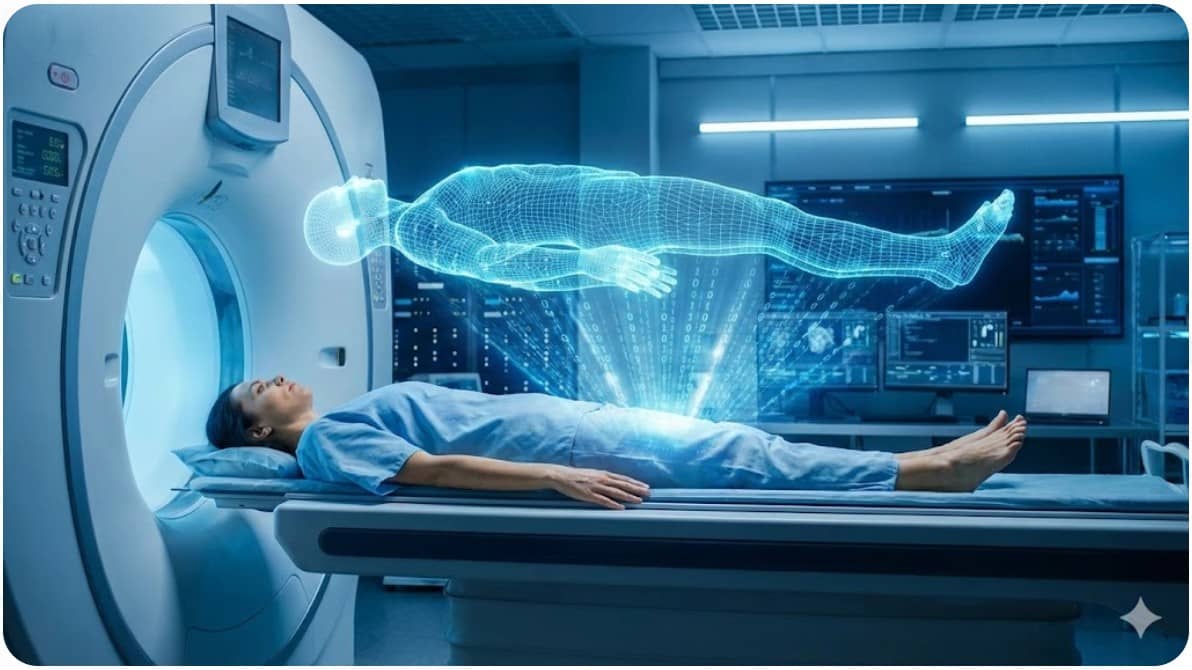
Let’s be honest for a second: nobody actually likes going to the doctor. Between the freezing cold stethoscope, the decades-old magazines in the waiting room, and that nagging anxiety that you’re about to receive bad news, the whole experience is enough to spike anyone’s blood pressure. But what if you didn’t have to go? What if a virtual version of you—a sophisticated, data-driven doppelgänger—could visit the clinic, test out a new medication, and even undergo surgery while you stayed home watching Netflix?
This isn’t the plot of a dystopian sci-fi novel; it is the rapidly arriving reality of Medical Digital Twins.
We are standing on the precipice of a healthcare revolution that promises to trade the “trial and error” of traditional medicine for the precision of predictive healthcare. To understand how AI health diagnostics is laying the groundwork for these virtual patient models, read our comprehensive patient guide. For anyone tired of generic treatments that don’t quite work, or for professionals looking for the next massive shift in patient care, the most exciting development in modern medicine is undoubtedly the rise of virtual patient models.
Beyond the Avatar: What Exactly Are They?
When I first heard the term, my mind immediately jumped to those cartoon avatars we use on social media—you know, the ones with the slightly-too-perfect hair. But a Medical Digital Twin is something far more complex and infinitely more valuable.
Imagine a dynamic, living software model that mirrors your unique physiology down to the molecular level. It isn’t just a 3D picture; it is a computational replica fed by a constant stream of real-world data from your electronic health records, genetic sequencing, and even the smart watch on your wrist. While you live your life in the physical world, your digital twin technology in healthcare counterpart is living in the cloud, aging, digesting, and reacting to virtual stimuli.
The goal isn’t just to see what you look like on a screen; the goal is hyper-personalized medicine.
That kind of precision starts with understanding what your body is already communicating right now, before any virtual model enters the picture. The early warning signs of hidden illness your digital twin could one day predict are, in many cases, the same physical signals your body is already producing today — fatigue, weight shifts, skin changes, cognitive fog. Learning to read those signals is the human side of the same equation.
The “Now”: How Sci-Fi is Saving Lives Today
You might be thinking, “That sounds great, but it’s probably twenty years away.” You’d be wrong.
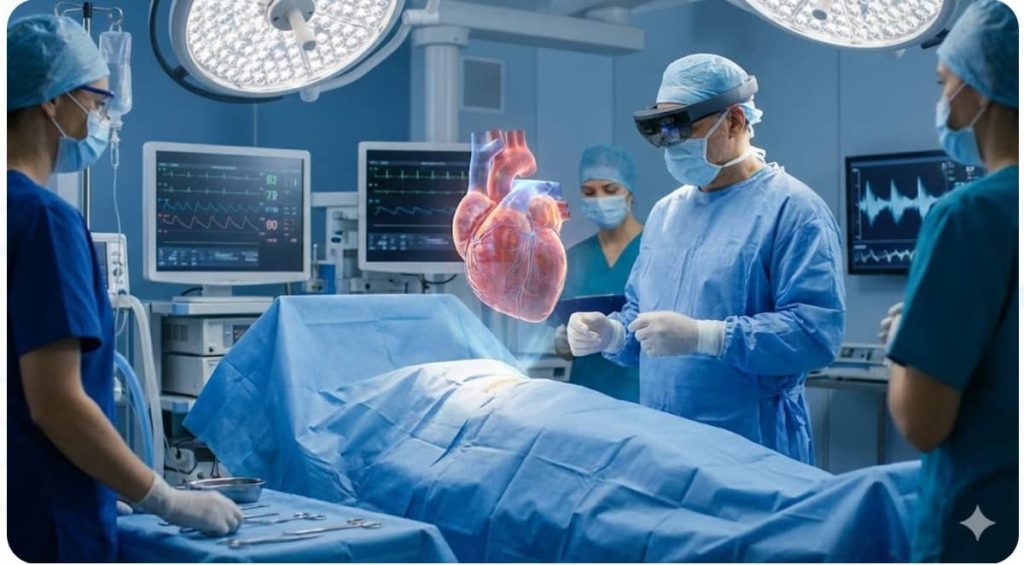
In top-tier research hospitals and advanced clinics right now, Medical Digital Twins are already clocked in and working. Take cardiac care, for example. Surgeons are currently using the “Living Heart Project” to create exact virtual replicas of a patient’s heart—defects and all. Before they ever scrub up or make a single incision, they can perform the surgery on the twin, seeing exactly how the heart tissue responds to a specific procedure. By the time they operate on the actual patient, they aren’t guessing; they are executing a plan that has already succeeded.
We are seeing the same breakthroughs in oncology. Instead of using a patient as a guinea pig for harsh chemotherapy drugs that might not work, doctors can dose the virtual patient models first. If the digital tumor shrinks without destroying the digital liver, they know the treatment is safe for the real human. This approach, often called in silico trials, is quietly revolutionizing how we think about risk.
From Wearables to “You-ables”: Your Health Forecast
Here is where it gets personal—and frankly, a little bit cool.
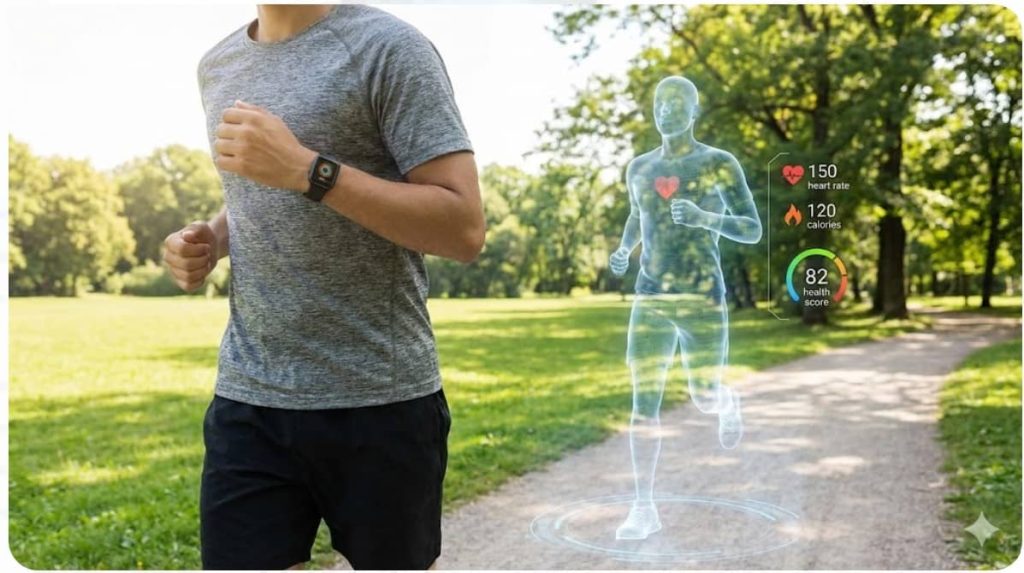
If you are one of the millions of people obsessively closing your rings on an Apple Watch or tracking your REM sleep with an Oura Ring, you are already building the foundation for your own Medical Digital Twin. Currently, that data just sits in an app, telling you that you didn’t walk enough last Tuesday. But in the near future, that data will feed your twin real-time information to generate a health forecast.
Imagine waking up to a notification not that you are sick, but that your digital twin developed a heart arrhythmia based on your last month of high stress and poor sleep. The system could alert you to change your habits before the physical symptom ever manifests. This is the holy grail of healthcare innovation: moving from reacting to illness to preventing it entirely.
The Professional Angle: The Business of Virtual Care
For the industry professionals reading this, the ROI here is undeniable.
Hospitals are bleeding money on readmissions and treatments that simply don’t work for specific biological profiles. By integrating Medical Digital Twins into clinical workflows, providers can drastically reduce the cost of care while skyrocketing patient outcomes. It is a rare win-win scenario where the patient gets better faster, and the hospital wastes fewer resources.
However, we can’t ignore the elephant in the server room: patient data security.
If a hacker steals your credit card, you can cancel it; if they steal the digital code that maps your entire DNA and medical history, that is a bell you cannot unring. As we rush toward this technology, the industry must ensure that the “vault” holding these twins is impenetrable.
The Verdict
We are done with the era of “one-size-fits-all” medicine.
The future is bespoke, data-driven, and intimately tailored to the specific code that makes you, you. Medical Digital Twins represent the bridge between the biology we are born with and the technology we have built.
So, while you might not have a virtual clone sitting on your hard drive today, just wait a little longer. The doctor will see you now—or rather, the doctor will see it now.
Are you ready to embrace the data-driven future of your health? Leave a comment below on whether you would trust a computer simulation to predict your future medical needs.